Launching the Backyard Biodiversity Blitz!
What lives in our backyards?
From brushtail possums moving through suburban trees to northern blue-tongue skinks basking in the heat, Broome’s neighbourhoods are home to an extraordinary diversity of wildlife. Some of these species are threatened, culturally significant, and increasingly under pressure - yet many remain unseen, unrecorded, and poorly understood.
Environs Kimberley is excited to launch the Backyard Biodiversity Blitz, a new community-based project working with Broome residents to monitor and protect threatened wildlife living alongside us.
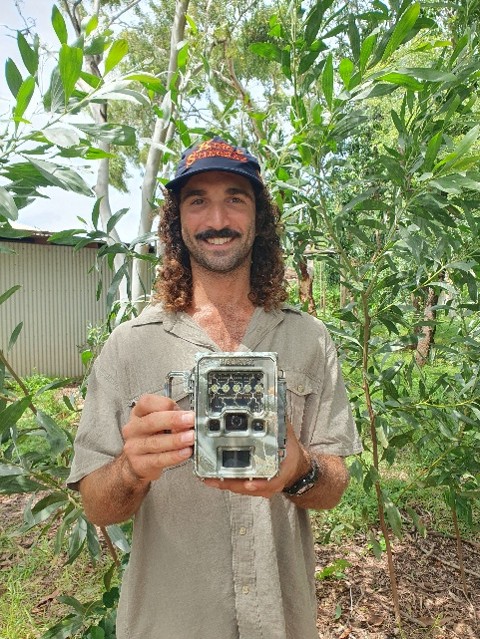
Project Officer, Tom, with a motion-sensor camera.
What is the Backyard Biodiversity Blitz?
The Backyard Biodiversity Blitz will engage local households, community groups, businesses and organisations in a coordinated wildlife monitoring effort using motion-sensor cameras. By placing cameras in backyards and nearby green spaces, citizen science volunteers will help collect vital information on species such as the greater bilby, northern brushtail possums, northern blue-tongue skinks, and, potentially, the northern quoll.
This community-based approach will generate much-needed data on where these species occur, how they use and interact with urban and peri-urban habitat, and the threats they face. Just as importantly, it hopes to build local knowledge, pride and shared responsibility for protecting Broome’s unique fauna.
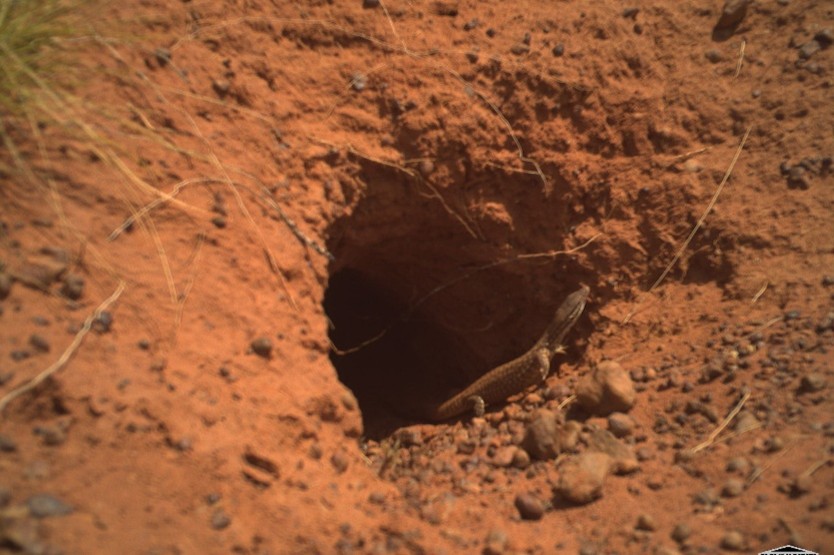
Sand monitor recently captured on an EK motion-sensor camera deployed in the Kimberley.
Why this project is needed
Broome is surrounded by Country rich in biodiversity and cultural significance. Despite this, there is very little systematic wildlife monitoring in Broome’s residential zones. Many threatened species go unnoticed, while growing pressures - including habitat clearing, fragmentation, and predation by domestic and feral animals - place them at greater risk.
Species like the greater bilby, listed as Vulnerable under both the IUCN Red List and the EPBC Act, have been recorded on the outskirts of town, yet their populations are increasingly impacted by habitat disturbance and predation from introduced species such as feral cats. Understanding where bilbies persist in and around Broome is essential for protecting remaining populations.
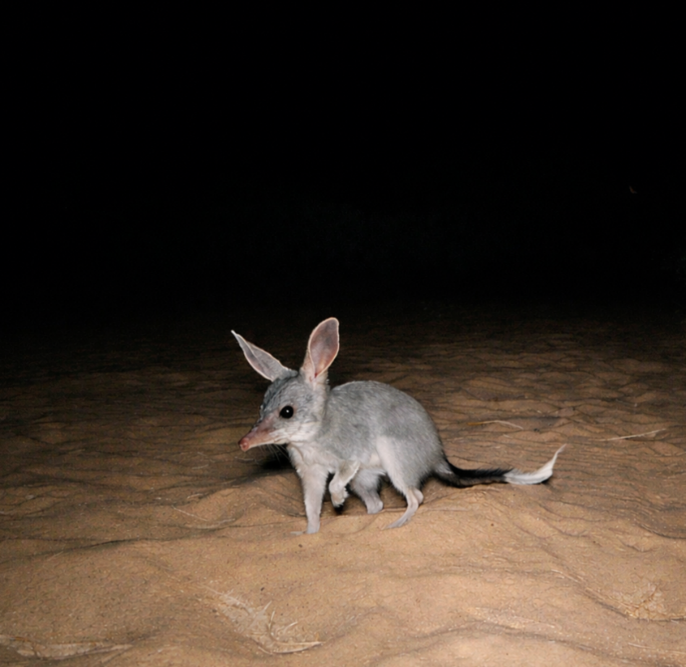
Greater bilby, recently captured on an EK motion-sensor camera deployed in the Kimberley.
Northern brushtail possums, listed as Vulnerable under the EPBC Act, present an important example of why local data matters. Records submitted to the Atlas of Living Australia indicate the presence of northern brushtail possums in Broome. However, recent findings from the Department of Biodiversity, Conservation and Attractions suggest that brushtail possums in the area may instead belong to the south-western subspecies.
This uncertainty highlights a critical knowledge gap. It is possible that both subspecies occur in Broome, but without systematic monitoring, their true distribution remains unclear. Accurately identifying which possum species are present - and where - is essential for understanding their conservation status, managing urban wildlife interactions, and ensuring appropriate protection into the future.
At the same time, possums are increasingly relying on residential areas as natural habitat is cleared or fragmented. This growing overlap with people brings additional risks, including vehicle strike, domestic pets, and human-wildlife conflict - further reinforcing the need for better local data.
Northern blue-tongue skinks, listed as Critically Endangered under the EPBC Act, also highlight the importance of early and ongoing monitoring. While they may still be present in the Broome region, populations in northern Australia have experienced severe declines associated with threats such as cane toads. With cane toads yet to reach Broome, establishing baseline data now is critical to understanding and responding to any future impacts.
The absence of data can also mask more serious declines. The northern quoll, listed as Endangered under both the IUCN Red List and the EPBC Act, was once anecdotally present in the region but has not been reliably recorded in Broome. Whether small populations persist undetected or the species has been locally lost remains unknown - highlighting how easily species can disappear without ongoing monitoring.
How the project will work
The project is delivered through Environs Kimberley’s Sustainable Communities team as part of a growing Citizen Science initiative, using a carefully designed monitoring model led by Environs Kimberley, and supported by partners including DBCA, Nyamba Buru Yawuru, the Shire of Broome, and local community groups and businesses.
During the wet season, Environs Kimberley developed a strategic camera deployment plan to ensure consistent data collection across different habitats and suburbs. As the dry season begins, volunteers will be recruited and workshops held to introduce participants to camera deployment and wildlife monitoring. Motion-sensor cameras will then be installed in backyards and public green spaces, with ongoing support provided to ensure ethical and effective placement.
Images will be reviewed, species identified, and data analysed to inform local conservation priorities and contribute to regional datasets.
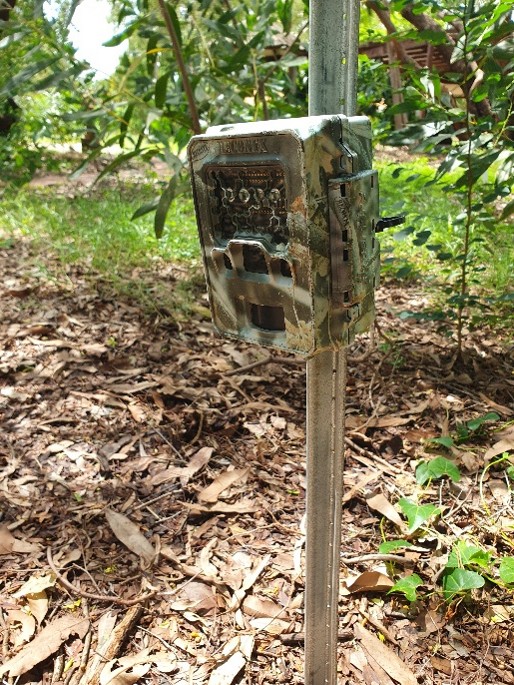
Installed motion-sensor camera, ready to capture passing wildlife.
What this project aims to achieve
With communities far more likely to protect what they understand and value, the Backyard Biodiversity Blitz addresses both the data gap and the engagement gap by combining hands-on community participation with scientifically robust monitoring. In the short term, the Backyard Biodiversity Blitz aims to increase community awareness and generate detailed wildlife data from areas rarely surveyed before. In the longer term, it hopes to support better conservation planning, improved threat management, and long-term stewardship of Broome’s wildlife.
This project complements Environs Kimberley’s existing work and aligns with national priorities under the Threatened Species Action Plan 2022–2032. By working together, we can help ensure these species remain part of Broome’s landscape for generations to come.
If you’re interested in taking part, contact: [email protected].
This project is generously funded by Wettenhall Environment Trust:

This project is delivered by Environs Kimberley with the generous support of local volunteers, and DBCA, NBY, and the Shire of Broome.




References
Official species listings & profiles
-
Northern blue-tongue skink (Tiliqua scincoides intermedia) — Critically Endangered (EPBC Act). https://environment.gov.au/cgi-bin/sprat/public/publicspecies.pl?taxon_id=89838
-
Northern brushtail possum (Trichosurus vulpecula arnhemensis) — Vulnerable (EPBC Act) - https://www.dcceew.gov.au/environment/biodiversity/threatened/action-plan/priority-mammals/northern-brushtail-possum
-
Greater bilby (Macrotis lagotis) — Vulnerable (EPBC Act; IUCN Red List)
https://www.dcceew.gov.au/environment/biodiversity/threatened/species -
Northern quoll (Dasyurus hallucatus) — Endangered (EPBC Act; IUCN Red List)
https://www.dcceew.gov.au/environment/biodiversity/threatened/species
General resources
-
Atlas of Living Australia (ALA) — Species occurrence and biodiversity records
https://www.ala.org.au/
-
Department of Biodiversity, Conservation and Attractions (DBCA) — Threatened and priority fauna resources
https://www.dbca.wa.gov.au/management/threatened-species-and-communities/resources/threatened-and-priority-fauna-resources
-
Department of Climate Change, Energy, the Environment and Water (DCCEEW) — EPBC Act threatened species listings and profiles
https://www.dcceew.gov.au/environment/biodiversity/threatened/species
-
International Union for Conservation of Nature (IUCN) — IUCN Red List of Threatened Species
https://www.iucnredlist.org/
-
New subspecies recognition for brushtail possum in WA
The Department of Biodiversity, Conservation and Attractions highlights the recognition of the northern brushtail possum (T. v. arnhemensis) as a distinct subspecies in Western Australia.
https://www.dbca.wa.gov.au/landscope/spring-2025/new-subspecies-brushtail-possum-wa
Showing 1 reaction
Sign in with
Facebook