Ever wondered what makes Roebuck Bay one of the most fascinating places on the planet?
Meet our team on the magnificent mudflats and learn about the critters we find living amongst the mud and seagrass meadows.
Every 10 years, a huge invertebrate mapping project is undertaken to identify and record the species found within the sediment – this year marks the next survey. Join us for an introduction on how to take sediment samples, identify key groups of mud dwelling animals and learn about their importance to Roebuck Bay’s ecosystem.
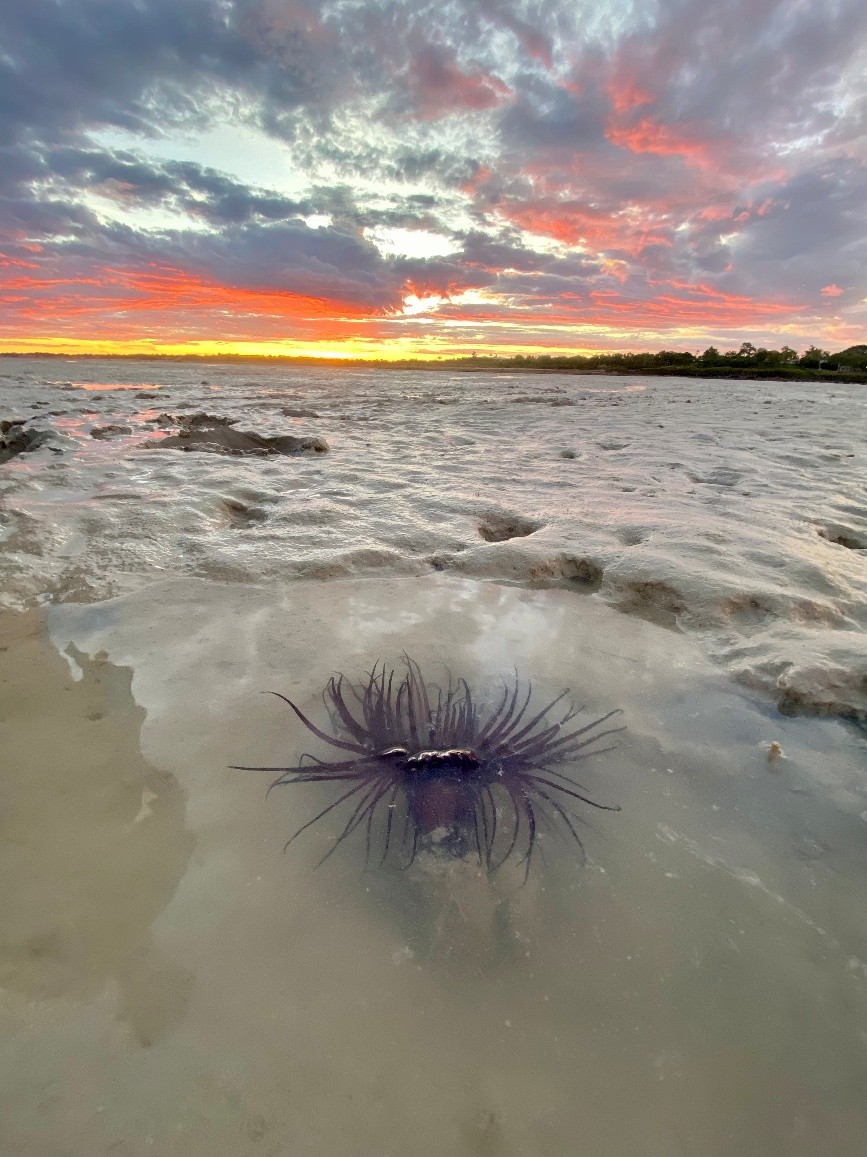
Tube anemones use their tentacles to capture food particles in the bay (Photo credit: EK)
Invertebrates are animals that do not possess a backbone, such as worms, crustaceans (crabs & shrimps), molluscs (sea slugs and snails) and echinoderms (sea stars, brittle stars). Roebuck Bay is home to over 350 of these benthic invertebrates (animals living on the seabed), which makes the bay one of the most biodiverse mudflats in the world.
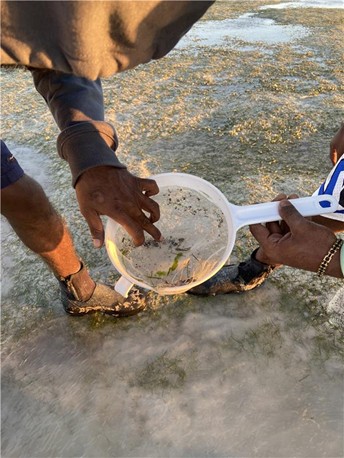
What will we find in the mud this time? (Photo credit: EK)
We will start the afternoon at 1:30 pm with snacks and refreshments, followed by a presentation and safety induction before heading out onto the mud. Please ensure you bring the following:
- Sun protection: protective clothing such as t shirt/long sleeve shirt, hat and sunscreen.
- Water bottle: save waste and bring your own bottle, we will provide water to re-fill.
- Reef Shoes: the mud flats are very sticky! We recommend you wear reef boots or an old pair of trainers. We will provide boots you can borrow if you do not have your own.
You can contact Alex anytime if you need help locating us or have any questions about the project.
For more information, contact Alex our Project Officer, on the details below:
Showing 2 reactions
Sign in with
Facebook