
Wetlands are the lifeblood of the Kimberley – places of deep cultural meaning, rich biodiversity, and community connection.
Kimberley Traditional Owners and their ranger teams are dedicated to caring for wetlands, although these wetlands face growing pressures from climate change, weeds, feral animals, and water development. For more than a decade, Environs Kimberley has worked alongside The University of Western Australia (UWA) and Kimberley ranger teams to strengthen Indigenous-led care for these freshwater places.
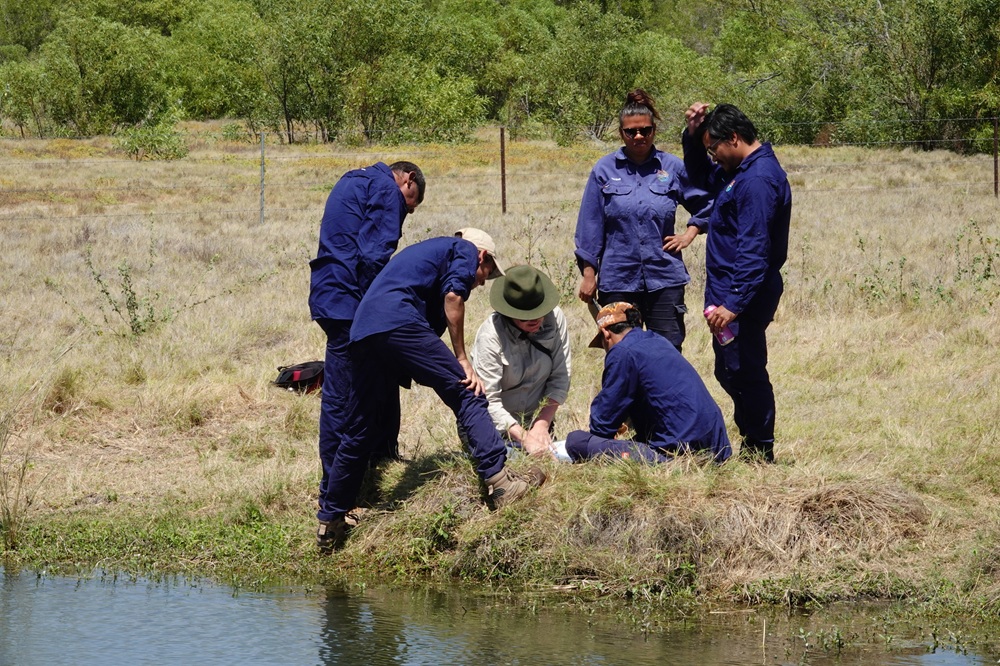
Nyamba Buru Yawuru Country Managers Vaughn Lee, Cole Corpus, Rebecca Dobbs (UWA), Chase Pigram (sitting), Gaydar Lawford and Lyall Pedro discussing monitoring at Mimyagaman. Photo: Mark Cowan.
We are now expanding this partnership through the National Environmental Science Program (NESP) Resilient Landscapes Hub with the Wetland Monitoring and Management Toolkit. The toolkit will be a publicly available guide offering practical tools for planning, doing and reviewing wetland monitoring.
Based on the work of Kimberley ranger teams, the toolkit is founded in three key principles:
• Start with Country priorities – work with ranger teams to use Healthy Country Plans as the foundation for wetland work.
• Make monitoring a full cycle – ask the right questions, choose monitoring tools that fit, and set up systems for managing and using data to feed back into management.
• Weave knowledge systems – consider Indigenous knowledge and Western science as separate, equally valid ways of knowing, that together provide a fuller picture of wetland health.
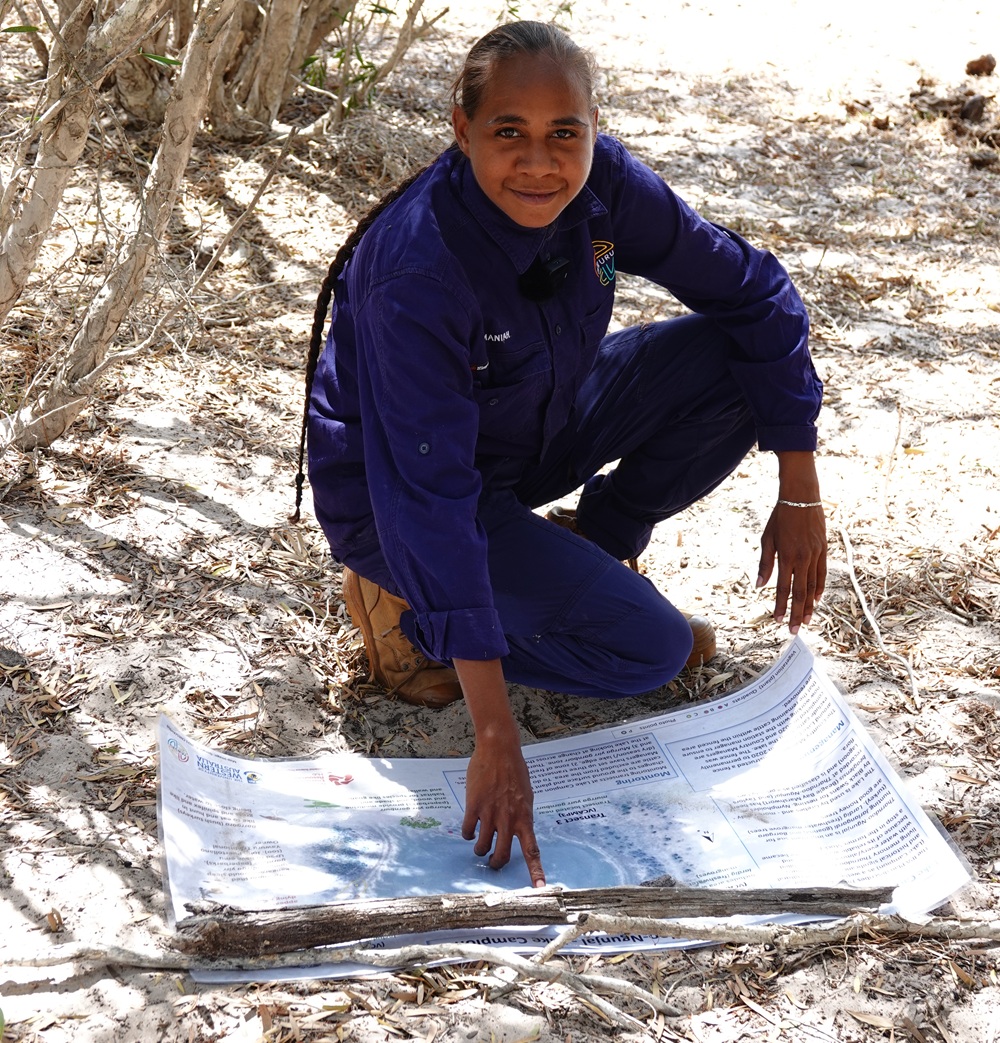
Jarndu Country Manager Romaniah Hunter at Tharndoo-Ngunjal (Lake Campion) with a poster summarising monitoring and management actions at this place. Photo: Mark Cowan.
Yawuru Case Study
One inspiring example is the Yawuru Environmental Services Unit who run two programs:
• Bilarra (wetland) monitoring, and
• Piezometer monitoring of groundwater across the Yawuru Indigenous Protected Area.
Recently, Yawuru Country Managers worked with EK and UWA to formally review both programs. These reviews helped the Yawuru team reflect on and interpret data using science and Yawuru knowledge, and helped clarify next steps for management. The partnership is also producing Standard Operation Procedures in field-friendly formats to support the Country Managers’ on-going monitoring, along with other support. By combining technical support with Yawuru knowledge, these processes are building skills and confidence for Yawuru to manage and adapt their programs independently into the future.
The Toolkit celebrates stories like this, along with practical, tested tools, strong partnerships, and Indigenous leadership in caring for wetlands. We’d like to acknowledge the Toolkit program supporters including the NESP Resilient Landscapes Hub, and Yawuru project supporters: the WA State Government (Aboriginal Ranger Program) and the WA State Government Natural Resource Management Program.
- Dr Michelle Pyke


This report first appeared as an article in our December 2025 EK News Issue 106.
Showing 2 reactions
Sign in with
Facebook